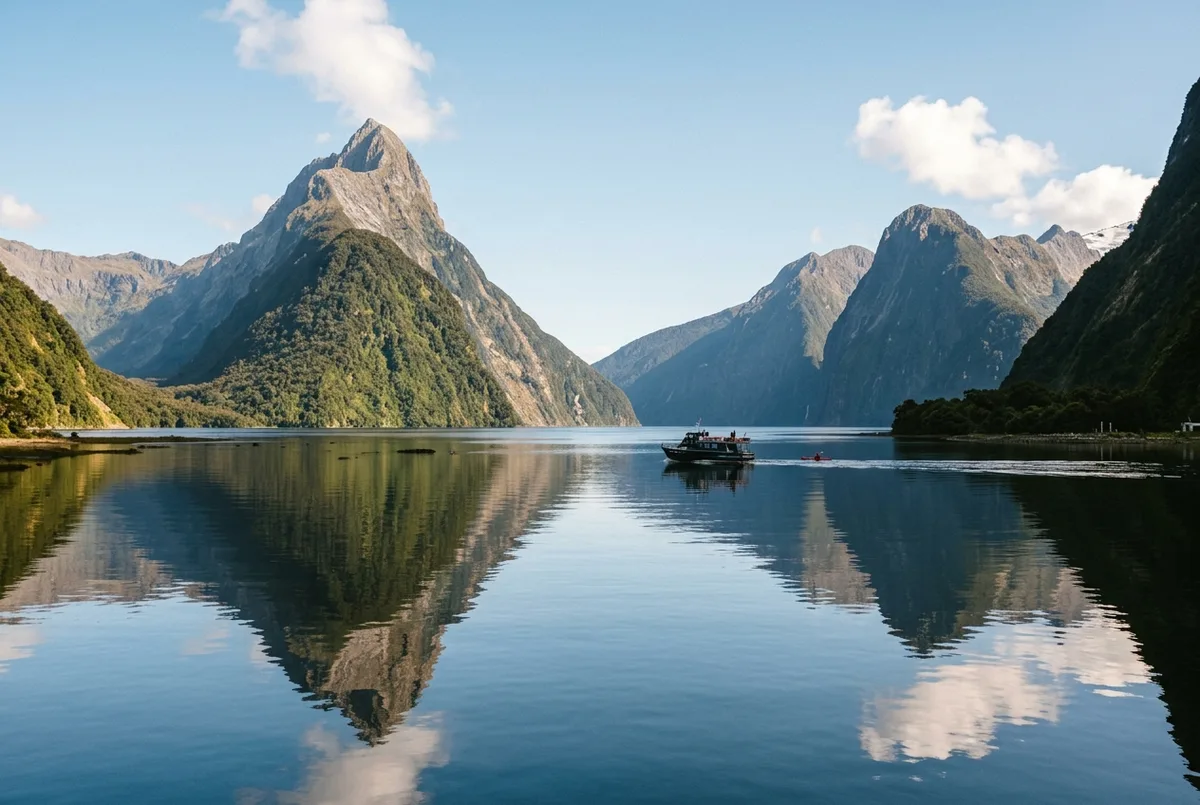
The History and Maori Name of Milford Sound: Piopiotahi
Why is Milford called Milford? John Grono's 1823 naming, the Maori name Piopiotahi, and the real history behind both, sourced from DOC.
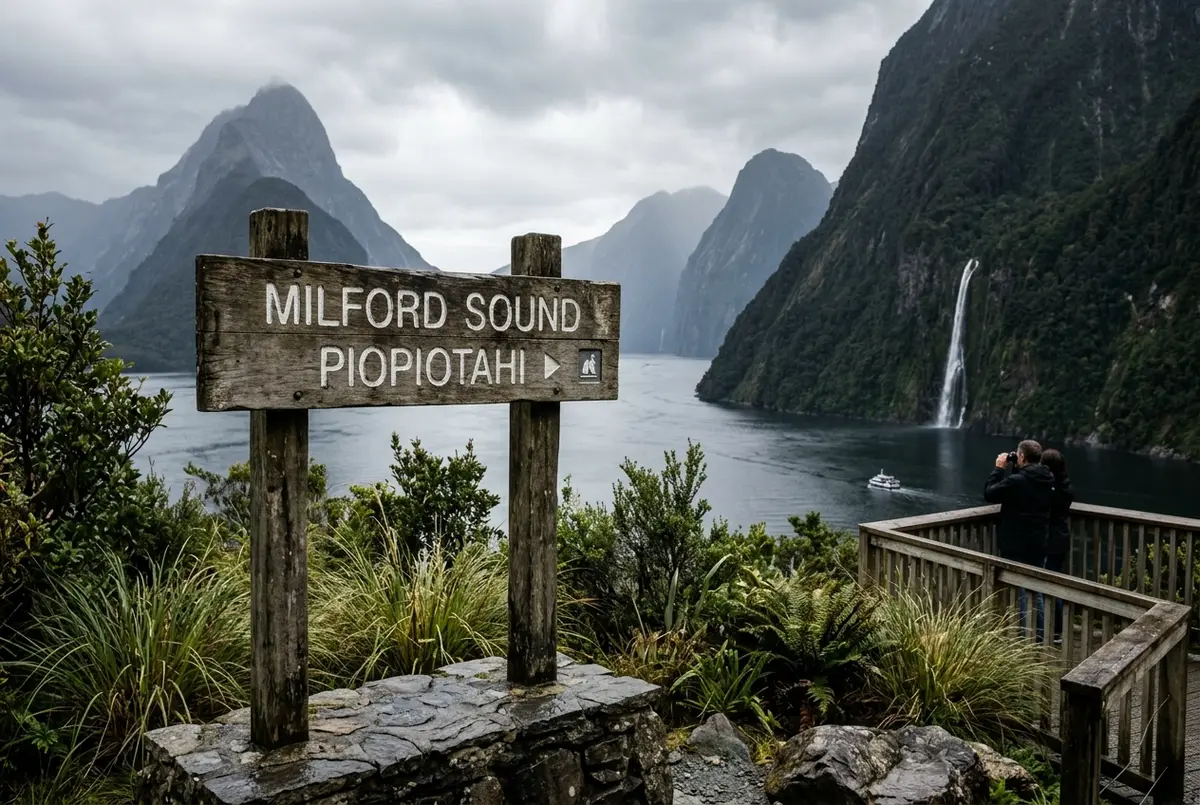
Milford Sound was named by Welsh sealing captain John Grono in 1823, after Milford Haven, his birthplace in Wales. Its older Maori name, Piopiotahi, comes from a mourning-bird legend and predates that naming by generations.
 Milford Sound 2 Hour Small Boat Scenic Cruise From $98.17 · Cheapest way onto the fiord See dates
On this page 8 sections
Why is Milford called Milford? A Welsh sealing captain named it after his hometown in 1823, but that is only half the story: the fiord already carried an older Maori name, Piopiotahi, and both names are used officially today.
What is Milford Sound called in Maori?
Milford Sound’s Maori name is Piopiotahi, meaning roughly “a single piopio” after the now-extinct native thrush. The name belongs to a legend, not a map survey, and it predates the English name by generations.
DOC’s own page for the area gives the Maori name as Piopiotahi, after the native thrush, piopio, now probably extinct. It is also the route early Maori used to transport kokotakiwai greenstone to Murihiku, Southland.
What does Piopiotahi mean and where does the legend come from?
In Maori tradition, a single piopio bird is said to have flown to the fiord mourning the death of the demigod Maui, giving the place its name. A separate tradition credits Tu-te-raki-whanoa with carving Fiordland’s cliffs from formless rock.
Wikipedia records that in legend a piopio flew to the fiord in mourning following Maui’s death, and that tahi means one in Maori. That is a naming legend. DOC separately records a formation legend: Maori tradition also describes a demigod, Tuterakiwhanoa, said to have carved the landscape from formless rock. The two stories answer different questions: one explains the name, the other explains the fiord itself.
Why is Milford called Milford?
Welsh sealing captain John Grono named the fiord after Milford Haven, his birthplace in Wales, in 1823. Captain John Lort Stokes later fixed the name as Milford Sound, even though the feature is technically a fiord.
DOC’s own area page confirms that Milford Sound was named by a Welsh sealing captain, John Grono, after his birthplace, Milford Haven. Wikipedia dates that naming to 1823, and adds that Captain John Lort Stokes later renamed Milford Haven as Milford Sound.
| Name | Given by | Meaning or honours | When | |
|---|---|---|---|---|
| European | Milford Sound | John Grono, Welsh sealing captain | After Milford Haven, his birthplace | 1823 |
| Maori | Piopiotahi | Traditional | ”A single piopio,” after the mourning-Maui legend | Generations before 1823 |
Milford Sound's history in dates
Source:Department of Conservation (DOC)Did Maori know about Milford Sound before Europeans arrived?
Yes. Maori used the sound and its sea route for generations before any European saw it, gathering greenstone near its mouth and travelling the inland route over what is now the Milford Track. The European “discovery” only ever meant a first European sighting.
DOC’s history page notes that takiwai, a translucent greenstone, was sought from Anita Bay and elsewhere near the mouth of Piopiotahi, and that seasonal food-gathering camps were linked by well worn trails long before European surveyors arrived in the mid-19th century.
Who was Donald Sutherland and why is he linked to Milford Sound’s history?
Donald Sutherland was a Scottish sealer and prospector who became the first European resident, settling in 1877 to 1878 and building three huts he called the “City of Milford.” He later helped cut the Milford Track with Quintin Mackinnon.
On first seeing the fiord, Sutherland is recorded as declaring “if ever I come to anchor it will be here”, and he made good on it. DOC confirms that in 1878 he built three thatched huts he called the City of Milford, and about a dozen years later cut the Milford Track with Quintin Mackinnon.
“If ever I come to anchor it will be here.”
Donald Sutherland, via Department of Conservation, 2026 · source
How did Milford Sound become accessible to visitors?
The Milford Track opened around 1889, giving walkers a route in, but road access did not exist until the Homer Tunnel finally opened after work began in 1935 and was delayed by wartime conditions.
DOC dates the Track to about a dozen years after Sutherland’s 1878 huts, cut by Sutherland and Quintin Mackinnon, while work on the Homer Tunnel began in 1935 and was delayed by difficult conditions and the Second World War until completion in 1954. If you’re planning the modern drive yourself, see the road to Milford Sound for what that same route looks like today.
Why is Milford Sound famous?
Milford Sound is famous because its dual history, a place carved by legend and shaped by real cliffs and waterfalls, gave it a reputation as one of Fiordland’s defining landscapes long before tourism existed.
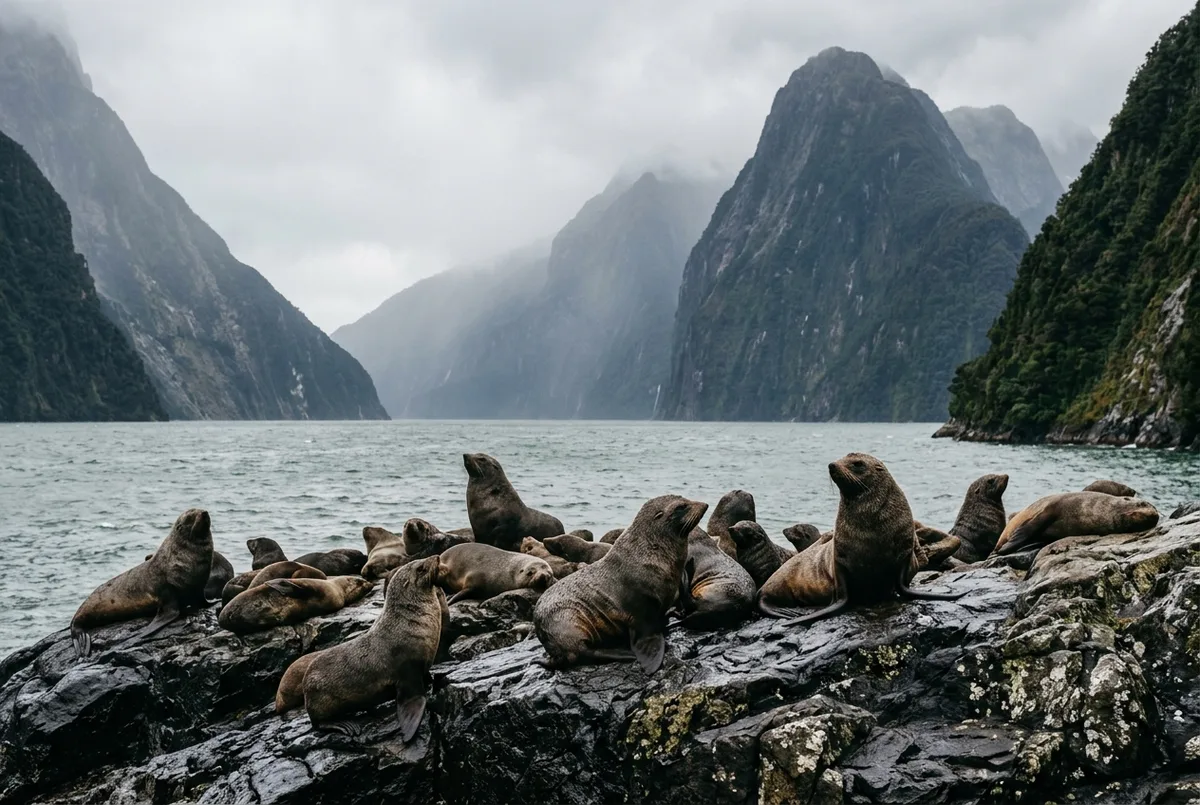
Fiordland National Park itself became a World Heritage Area in 1986, decades after Sutherland’s first huts, so the fame built slowly from a working route into a global drawcard. For the natural features and the “wonder of the world” claim behind that reputation, see Milford Sound facts, and for the fur seals and dolphins that now greet every cruise, see Milford Sound wildlife.
Questions
Is Milford Sound actually a fiord or a sound?
Geologically it is a fiord, carved by glaciers rather than a river. The English name “Sound” stuck after Captain Stokes applied it, so the geology and the name now simply sit side by side in the place’s history.
What is the official name of Milford Sound today?
Both names are used officially, usually written together as Milford Sound / Piopiotahi. This carries the European naming story and the older Maori legend side by side.
Was the piopio bird a real species?
Yes. The piopio was a real native thrush-like bird that is now believed extinct, and its disappearance is part of why the naming legend feels so distant today.
Who was Quintin Mackinnon?
Quintin Mackinnon worked alongside Donald Sutherland to cut the Milford Track in the late 1880s. Together they opened the walking route between Te Anau and Milford Sound that guided visitors still use today.