The Road to Milford Sound: Distance, Drive Time and Is It Scary
Milford Road explained: the Homer Tunnel's length, winter chains, speed limits and an honest answer to whether the drive is actually scary.
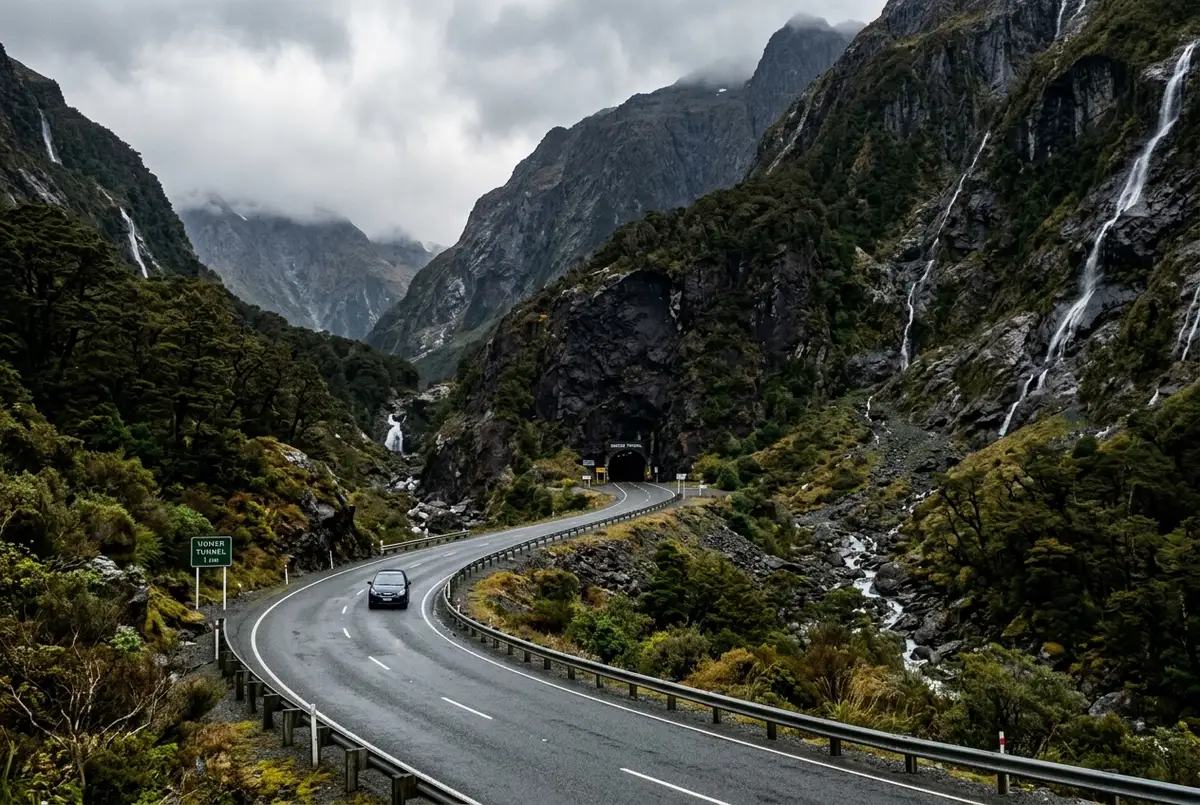
The Milford Road is State Highway 94, the single sealed road to Milford Sound. It is narrow, winding and has a 1.2 km one-lane tunnel, which feels intimidating at first, but official sources call it challenging, not technically dangerous.
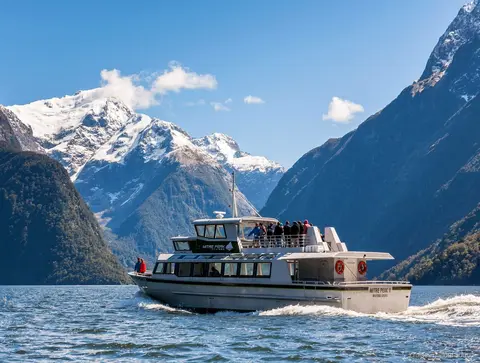 Milford Sound 2 Hour Small Boat Scenic Cruise From $98.17 · Cheapest way onto the fiord See dates
On this page 8 sections
The Milford Road is State Highway 94, the only road in or out of Milford Sound, and it is the reason “is the drive scary” is one of the most repeated questions anyone researching this trip asks.
What Is the Milford Road?
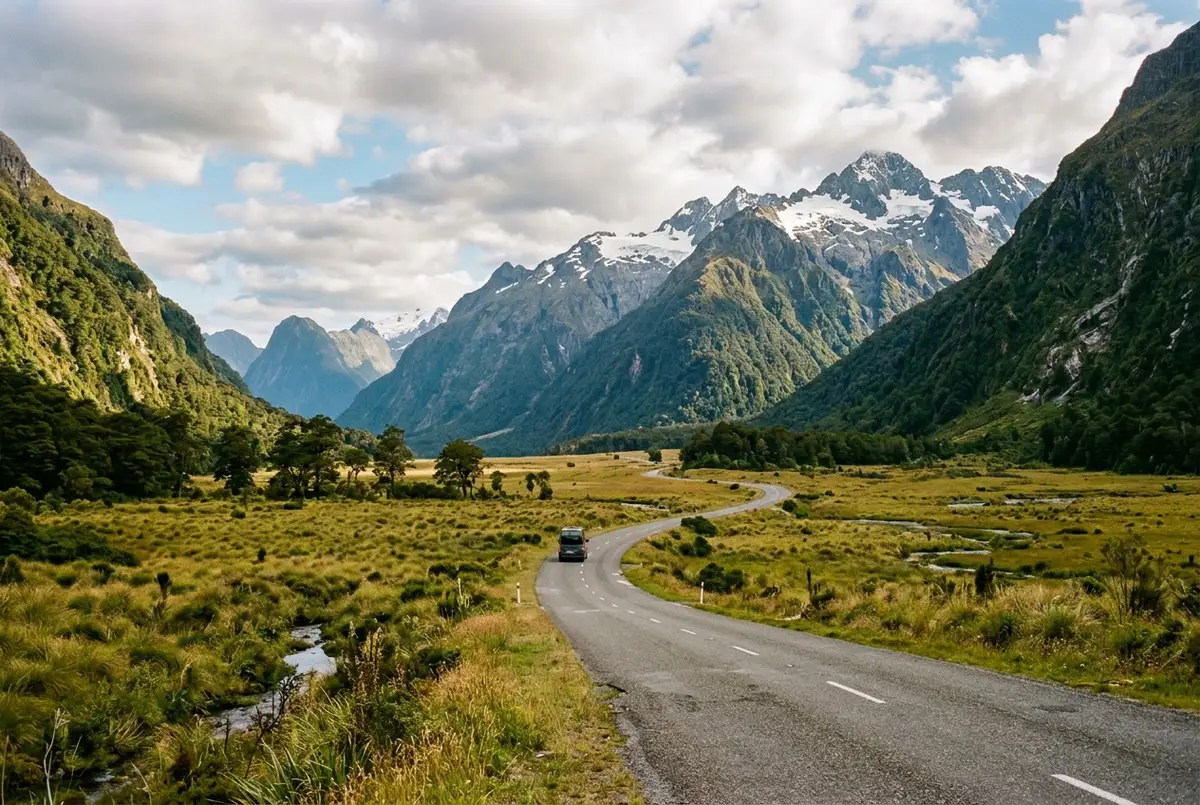
The Milford Road is the official name for State Highway 94 (SH94), the single sealed road connecting Te Anau to Milford Sound. There is no other road in: every car, bus and campervan reaching Milford Sound uses this route.
Fiordland’s own tourism body describes it as narrow, winding and steep, with no passing lanes on much of the route, which is exactly why it has such a reputation before anyone has even driven it.
The Milford Road in numbers
Source:New Zealand Gazette and Wikipedia (Homer Tunnel)Where the Milford Road starts
Open in Google MapsIs the Drive to Milford Sound Scary?
The road is narrow, winding and has no passing lanes in places, which feels intimidating to first-time mountain drivers, but DOC and Fiordland’s own tourism body describe it as challenging and slow rather than technically dangerous when driven with care.
Say you are a first-time mountain driver approaching the Homer Tunnel’s dark 1.2 km bore for the first time: the lane feels narrow and the rock walls close in. The fix is simple: slow down, keep left, watch for the traffic light, and let the oncoming direction clear before you commit to the tunnel. DOC’s own guidance calls the road stunning but slow, challenging and stressful at peak times, which is a very different claim from dangerous.
“The Milford Road is stunning but it can be slow, challenging and stressful.”
Department of Conservation (DOC), 2026 · source
Is It Difficult for Americans to Drive the Milford Road?
The main adjustment for visitors used to driving on the right is staying disciplined on the left, especially through the Homer Tunnel and at pull-over bays. The road itself is tar-sealed and maintained to state highway standard, not an off-road track.
Fiordland tourism’s own driving advice tells every driver, regardless of where they are from, to pull over and let traffic pass in motorhomes or larger vehicles, since there are no passing lanes. That single habit solves most of what trips up visitors switching sides for the first time.
How Long Is the Homer Tunnel and How Does It Work?
The Homer Tunnel is 1.2 km long with two lanes wide enough for a bus and a smaller vehicle to pass. Traffic lights, added in 2004 alongside roof lighting, run one way flow during summer daylight hours, but are switched off in winter and spring because queuing at the portals is an avalanche risk.
The tunnel’s east portal sits at 945 m elevation and descends at roughly a 1:10 gradient to the western portal. Two coaches or campervans meeting inside is genuinely tight, which is exactly why the light system exists for the busy summer season.
Do I Need Snow Chains on the Milford Road?
Chains can be required on sections of SH94 approaching the Homer Tunnel during snow, which is why NZTA gazetted a variable speed limit covering the tunnel approaches for exactly this kind of changing condition.
A 2021 Gazette notice approves a variable limit of 60, 40 or 30 km/h on the section running from about 1,588 m east of the tunnel’s east portal to about 2,277 m west of the west portal. If you are self-driving from Queenstown or Te Anau in winter, check current road status before you commit to the drive rather than assuming summer conditions.
| Season | Road surface | Tunnel lights | Chain risk |
|---|---|---|---|
| Summer (Oct-Apr) | Sealed, busier traffic | On, daylight, one way | Low |
| Winter/spring | Sealed, less traffic | Off (avalanche risk) | Possible on approaches |
What Are the Avalanche Zones on SH94?
The highest-risk stretch sits on the Milford side of the Homer Tunnel, which is why the tunnel’s own traffic lights are turned off rather than used in winter: authorities would rather keep traffic moving through than have vehicles queued and stationary in an avalanche path.
That tradeoff, explained by the tunnel’s own history of a 1945 avalanche that destroyed the eastern portal during construction, is the clearest sign this is a managed real hazard, not exaggerated marketing copy.
What Speed Limits Apply on the Milford Road?
A gazetted variable limit of 60, 40 or 30 km/h applies on the approaches to the Homer Tunnel, which Waka Kotahi can drop further for traffic volume, congestion, emergencies or weather, on top of the open road limits that apply along the rest of SH94.
The notice gives Waka Kotahi the authority to change the limit for safety due to traffic volume, congestion, emergencies, different road users, or environmental conditions, so the posted number on any given day can be lower than the gazetted maximum.
If you’re deciding whether the whole day trip from Queenstown is worth this drive at all, that question (rather than the road itself) is answered on the Milford Sound itinerary pillar. For the leg-by-leg logistics, see Queenstown to Milford Sound and Te Anau to Milford Sound.
Questions
Can I drive the Milford Road in a rental car?
Yes. It is a sealed state highway and most rental companies allow it, though you should check your rental agreement for any winter chain or insurance conditions before you go.
Is there fuel on the Milford Road?
No reliable fuel stop exists between Te Anau and Milford Sound. Fill up in Te Anau before you set out, since there are only limited facilities at Milford Sound itself.
How many lanes does the Homer Tunnel have?
Two. It is wide enough for a bus and a smaller vehicle to pass, but two coaches or campervans meeting inside is genuinely tight.
When were traffic lights added to the Homer Tunnel?
Traffic lights were reintroduced in 2004, the same year roof lighting was installed. They run only during summer daylight hours.