Milford Sound Facts: Why It's Famous, and Why It's a Sound, Not a Fjord
Milford Sound facts: where it is, why it's technically a fjord called a sound, the eighth wonder claim explained, and its real depth and length.
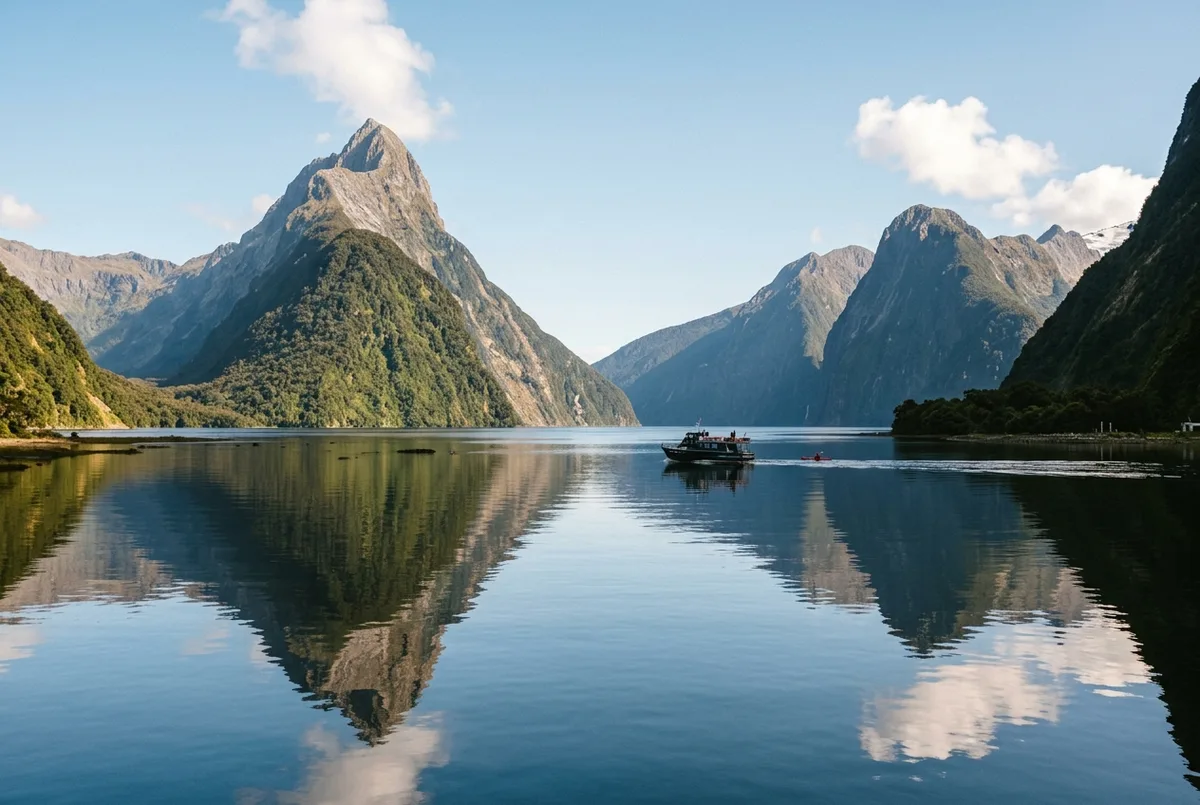
Milford Sound is geologically a fjord, not a sound, named by 19th century surveyors who got the term wrong. It sits in Fiordland National Park and draws over a million visitors a year to a cliff that rises 1,692 metres straight from the water.
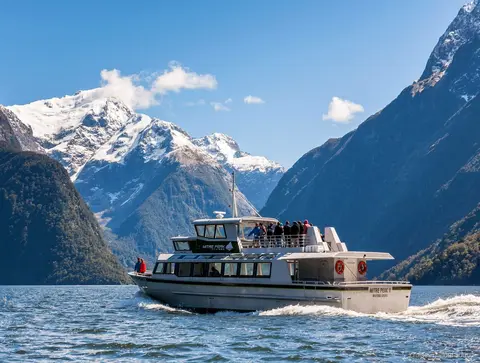 Milford Sound 2 Hour Small Boat Scenic Cruise From $98.17 · Cheapest way onto the fiord See dates
On this page 7 sections
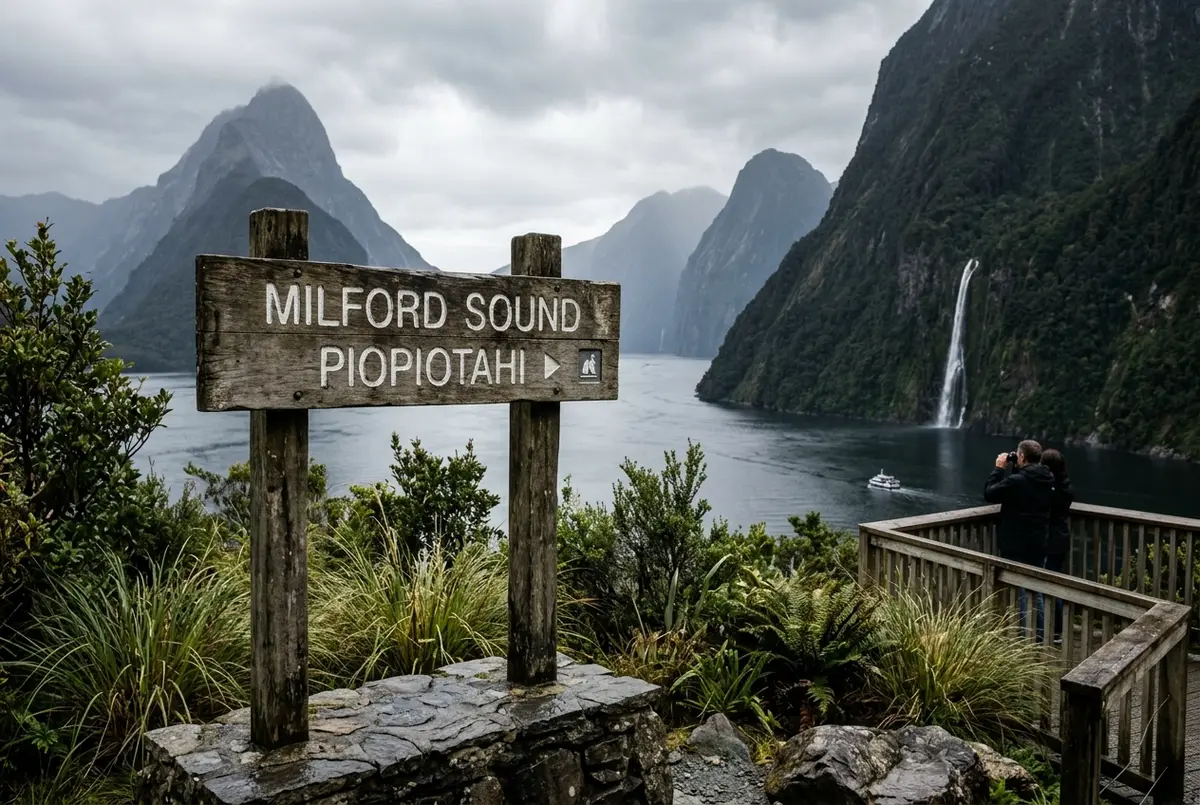
What are the key facts about Milford Sound? It’s a glacier-carved fjord in Fiordland National Park on New Zealand’s South Island, confusingly named a sound in the 19th century, and famous for Mitre Peak rising almost straight out of the water with no foothills.
Where is Milford Sound, NZ?
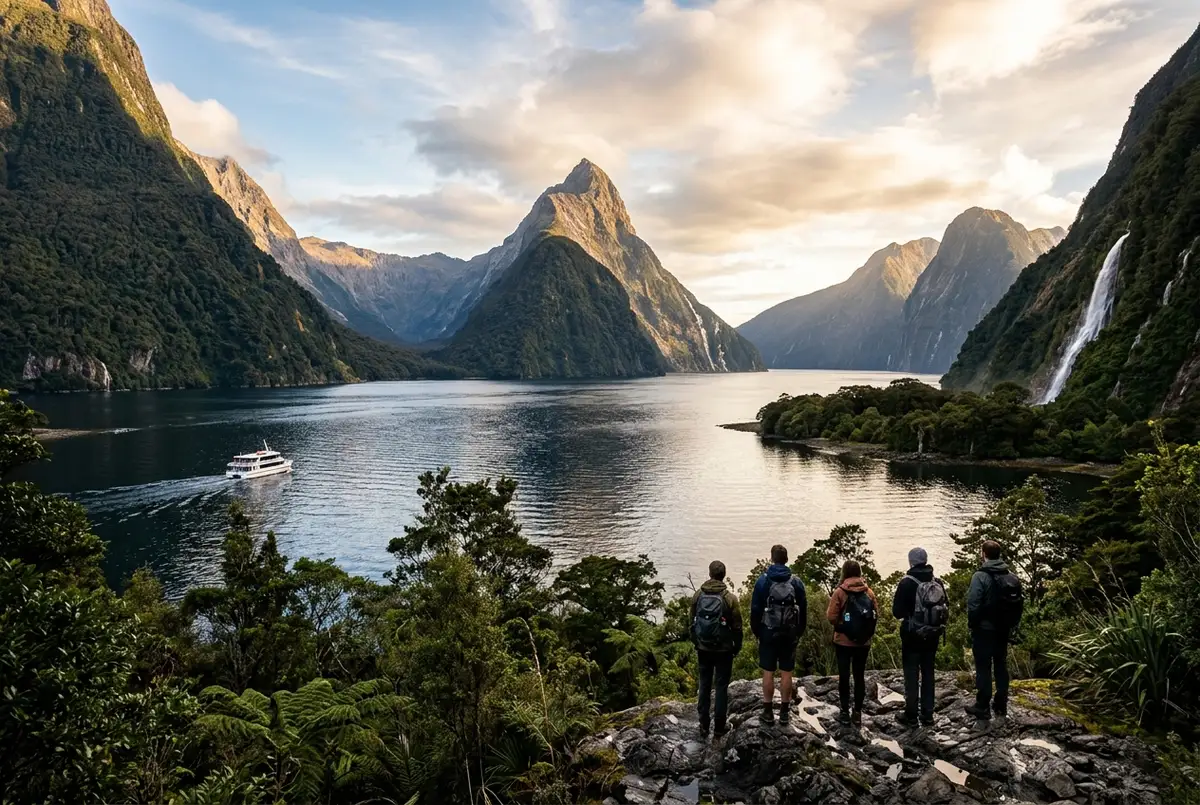
In the northwest of Fiordland National Park on New Zealand’s South Island. It sits inside a World Heritage Area that Getting there on the Milford Road, State Highway 94, counts among Aotearoa New Zealand’s most spectacular journeys, about 291 km by road from Queenstown and 121 km from Te Anau.
Where Milford Sound sits
Open in Google MapsIs Milford Sound actually a fjord?
Yes, geologically. It is a fiord, carved by glacial action rather than a river valley, which is the technical definition of a fjord. A true sound, by contrast, is a river valley flooded by the sea. The “sound” name dates to 19th century naming conventions and simply stuck despite being the wrong word geologically.
“It is a fiord, carved by glacial action rather than a river valley.”
RealNZ, 2026 · source
Why is Milford Sound so famous?
Scale, mostly. Mitre Peak rises 1,692 metres directly from the water with no foothills and no gradual approach, and the fiord draws over a million visitors a year, bringing $200 million to the region, all inside a vast World Heritage Area.
That combination of a dramatic single landmark and genuine global recognition is why it keeps turning up on best-of-New Zealand lists. For whether all that fame translates into a worthwhile cruise, see is a Milford Sound cruise worth it.
Milford Sound by the numbers
Source:Milford Sound (Entrada Travel Group) and Department of ConservationIs Milford Sound the eighth wonder of the world?
Not officially. The phrase has appeared in New Zealand tourism and travel writing for more than a century, often linked to Rudyard Kipling, though the evidence for that attribution is inconsistent and hard to verify. Milford Sound was nominated in the New7Wonders of Nature global vote but did not place in the final seven.
Say a reader is telling friends about their upcoming trip and wants to call Milford Sound the eighth wonder of the world. The honest version of that claim is a century-old, widely repeated line with a shaky attribution, not an official title, so it’s worth saying it as genuine enthusiasm rather than as a verified fact.
How deep and how long is Milford Sound?
Sources vary slightly, which is worth flagging rather than hiding. Milford-sound.co.nz puts the fiord at about 16km from head to open sea and up to 400m deep in places, while Wikipedia’s infobox lists a maximum depth of 291 metres and a maximum length of 15.1 km. Both agree that a shallow 27m sill separates that deep basin from the Tasman Sea.
| Measurement | Milford-sound.co.nz | Wikipedia |
|---|---|---|
| Length | ~16 km | 15.1 km |
| Maximum depth | Up to 400 m | 291 m |
| Mitre Peak height | 1,692 m | 1,692 m |
| Annual rainfall | Not stated here | 6,412 mm |
Is Milford Sound part of a World Heritage Area?
Yes. It sits inside Te Wahipounamu South West New Zealand, a 2.6 million hectare World Heritage Area covering almost 10% of New Zealand’s total land area, spanning Fiordland, Aoraki/Mount Cook, Mount Aspiring and Westland Tai Poutini national parks, inscribed in 1990 for its glacial landforms and ecological integrity.
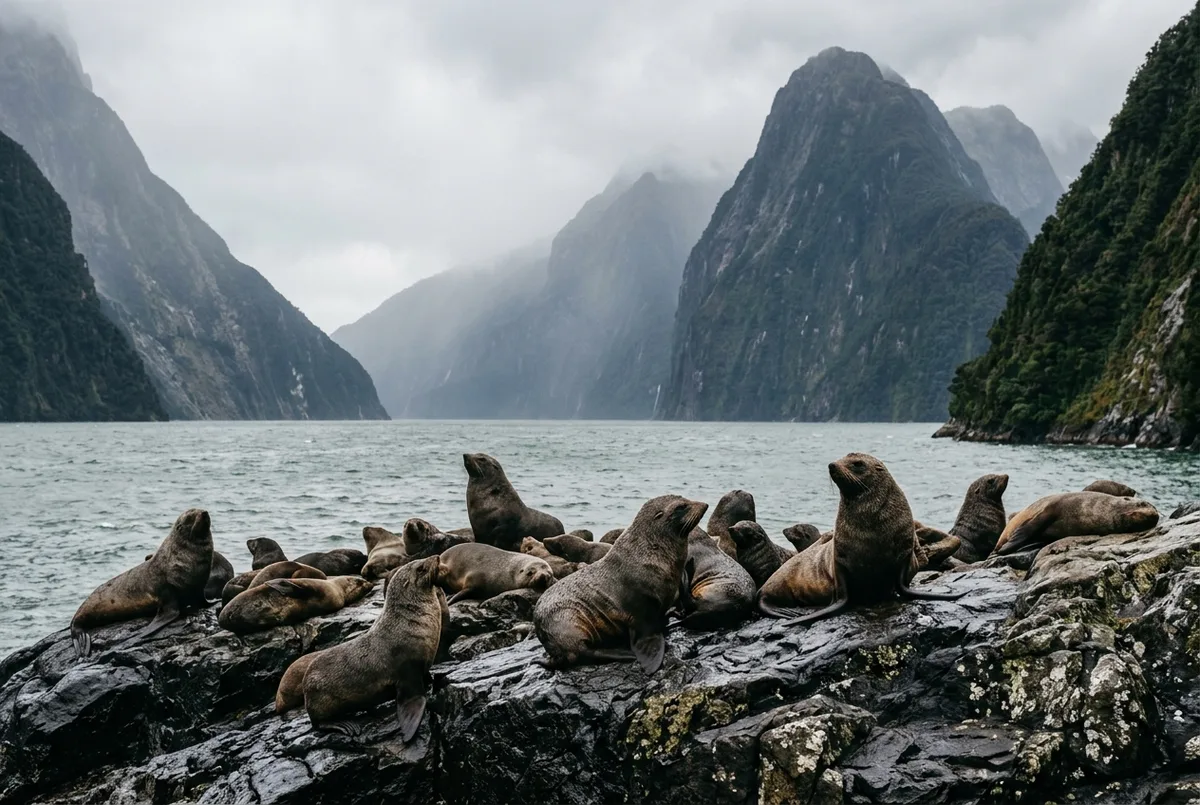
For the pop-culture question people ask almost as often as the geology questions, see was Lord of the Rings filmed at Milford Sound. For what you can realistically see on the water, see Milford Sound wildlife, and for the Maori name behind the English one, see the history and Maori name of Milford Sound.
Questions
How much rain does Milford Sound get each year?
Around 6.5 to 7 metres on average, with a recorded high of 9 metres in a single year, making it one of the wettest inhabited places on Earth.
Is Milford Sound the same place as the Milford Track?
No, but they’re connected. Milford Sound is the fiord itself, while the Milford Track is the multi-day walking trail that finishes there.
How many national parks make up the Te Wahipounamu World Heritage Area?
Four: Fiordland, Aoraki/Mount Cook, Mount Aspiring and Westland Tai Poutini national parks, together covering 2.6 million hectares.
Did Milford Sound win an official “wonder of the world” title?
No. It was nominated in the New7Wonders of Nature global vote but did not place among the final seven, so the “eighth wonder” phrase is tourism tradition, not an official title.