Milford Sound Weather: Rainfall, Temperature and the Best Time to Visit
Milford Sound weather by season: rainfall, temperature and the best time of day to visit, from DOC, Destination Fiordland and NIWA.
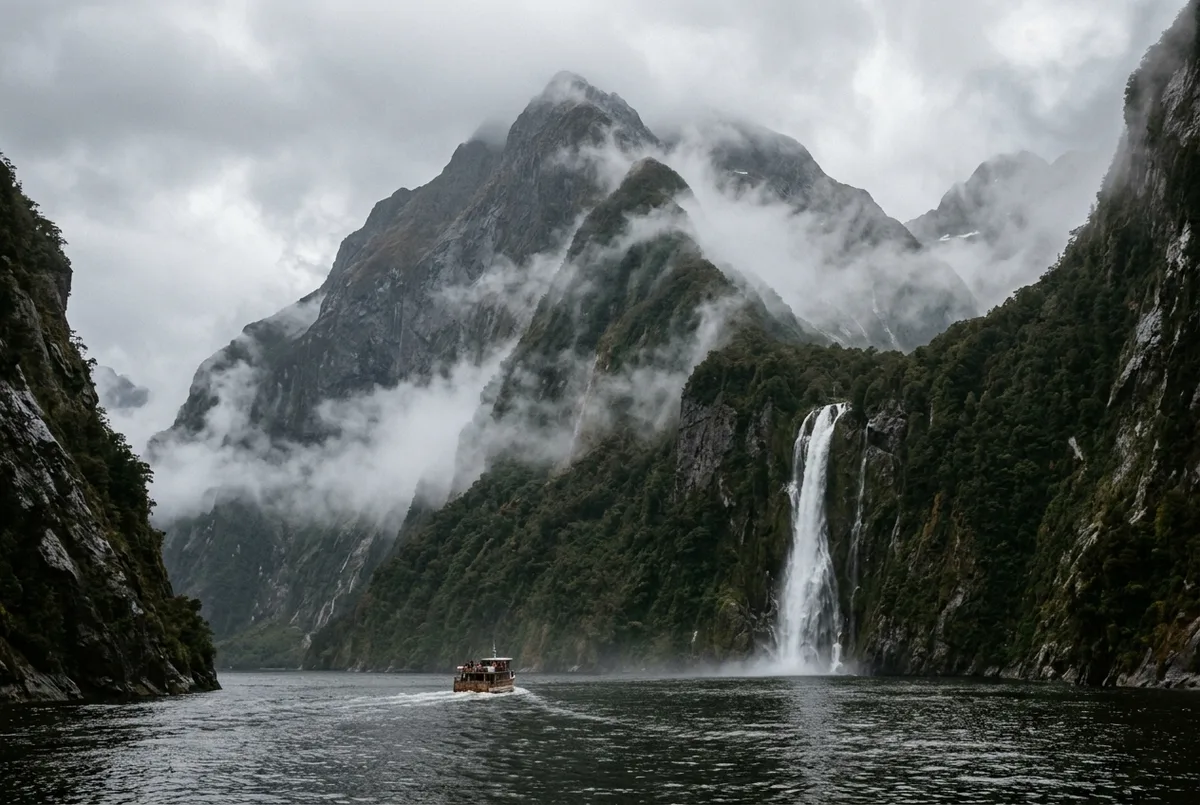
Milford Sound's weather is maritime, rain-heavy and fast-changing. It averages 6.5 to 7 metres of rain a year, one of the wettest totals on Earth, with winter the most settled season and spring the most changeable.
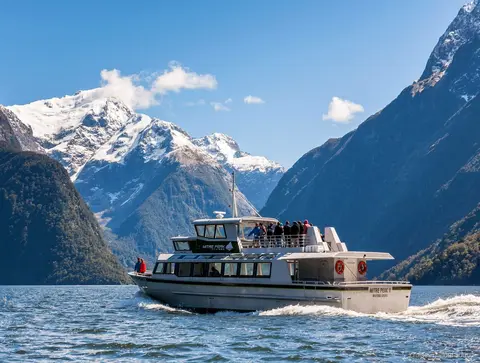 Milford Sound 2 Hour Small Boat Scenic Cruise From $98.17 · Cheapest way onto the fiord See dates
On this page 6 sections
Milford Sound’s weather is maritime, rain-dominated and quick to change: sun, mist and heavy rain can all show up within a single visit, and that pattern holds true whatever month you book.
What is Milford Sound’s weather like?
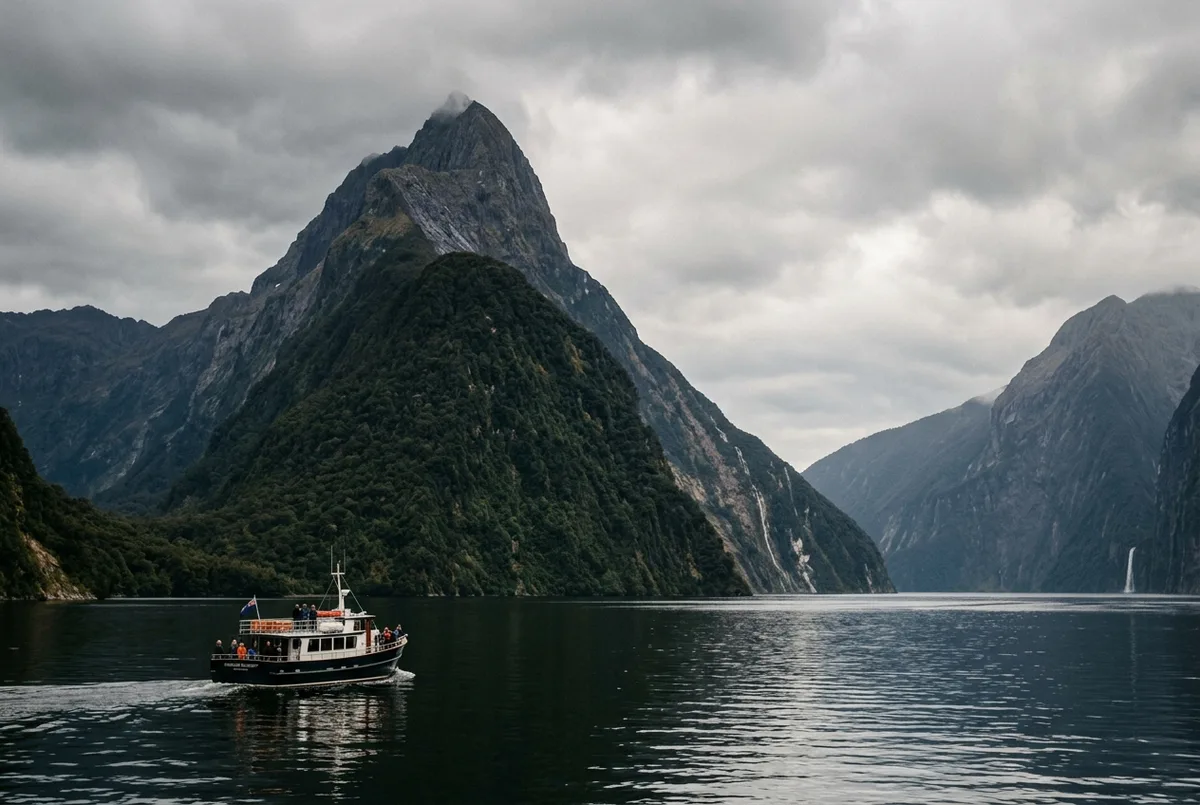
Wet and changeable, in a way most first-time visitors underestimate. DOC calls it one of the wettest areas in the country, with up to 7 metres of rain a year, and Destination Fiordland adds that weather can change quickly in this mountainous region, so packing for whatever may come matters more than chasing a specific forecast.
Say you booked your trip around a seven-day forecast that looked clear. By the time you arrive, that forecast has likely shifted at least once, since the fiord sits inside a system that moves fast off the Tasman Sea. Build flexibility into your plan rather than your exact weather expectation, and keep the cruise itself: see is a Milford Sound cruise worth it if rain is making you reconsider.
Milford Sound's climate in numbers
Source:Department of Conservation and NIWA, Earth Sciences New ZealandHow much rain does Milford Sound get?
A lot, consistently. The area averages 6.5 to 7 metres (21 to 23 feet) of rainfall a year, with a recorded high of 9 metres, inside a wider Southland region where NIWA records western ranges exceeding 8,000 mm annually.
That is roughly ten times New Zealand’s national average, by the numbers both sources report. It is also why every official source treats a raincoat as standard kit rather than optional.
“among the rainiest places on earth”
NIWA, Earth Sciences New Zealand, 2026 · source
What is Milford Sound like season by season?
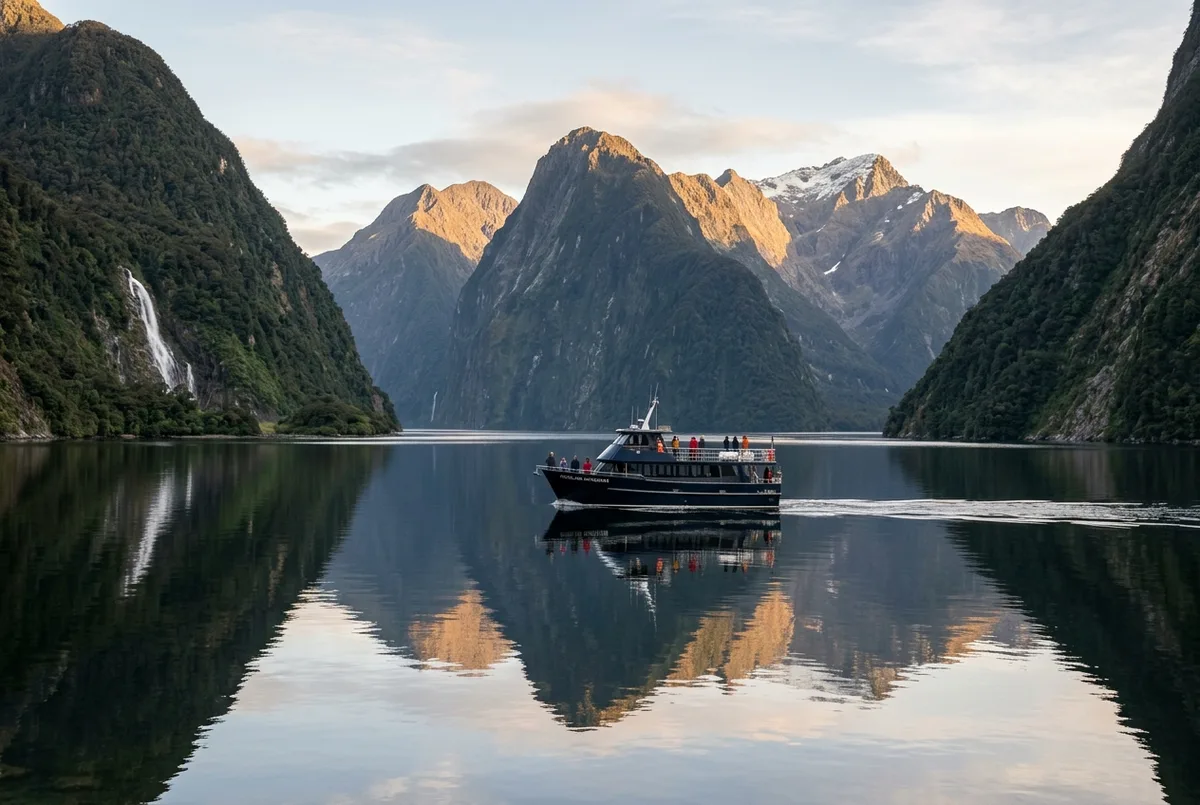
Each season has its own character more than its own risk of rain. Summer (December to February) runs warm with a cool day breeze as warm air rises over the water, autumn (March to May) stays mild but misty at 12 to 16 degrees C, winter (June to August) is the most settled time of year, often blue-skied and crisp, and spring (September to November) is the most changeable season of all, sometimes bringing snow to sea level.
Say a reader planning a March trip worries that autumn mist will ruin their photos. Working through the season-by-season pattern, the mist that bothers a sunny-day traveler is exactly what gives autumn mornings their moody, quieter character, and the crowds thin out too. That tradeoff is worth making rather than avoiding.
| Season | Months | Typical character |
|---|---|---|
| Summer | December to February | Warm, 18-20°C, cooling fiord breeze |
| Autumn | March to May | Mild, 12-16°C, more mist |
| Winter | June to August | Most settled, often clear and crisp |
| Spring | September to November | Most changeable, occasional snow at sea level |
When is the best time of day weather-wise to visit?
Early morning or late afternoon, by Destination Fiordland’s own recommendation, since those are the best times of day to explore Milford. Midday, by contrast, is when the Milford Road itself gets busiest, particularly in summer from October to April.
For how that timing interacts with crowds and light rather than weather alone, see best time of day for a Milford Sound cruise.
Where the weather changes on the drive in
Open in Google MapsDoes the Milford Track share this weather?
Yes. The Track and the fiord sit inside the same weather system, so the same rainfall pattern that makes the western ranges among the rainiest places on earth applies to trampers on the Track as much as to anyone cruising the fiord itself.
That shared system is also why packing right matters for either trip: see what to wear on a Milford Sound cruise for the layering details.
Questions
Is Milford Sound worth it in the rain?
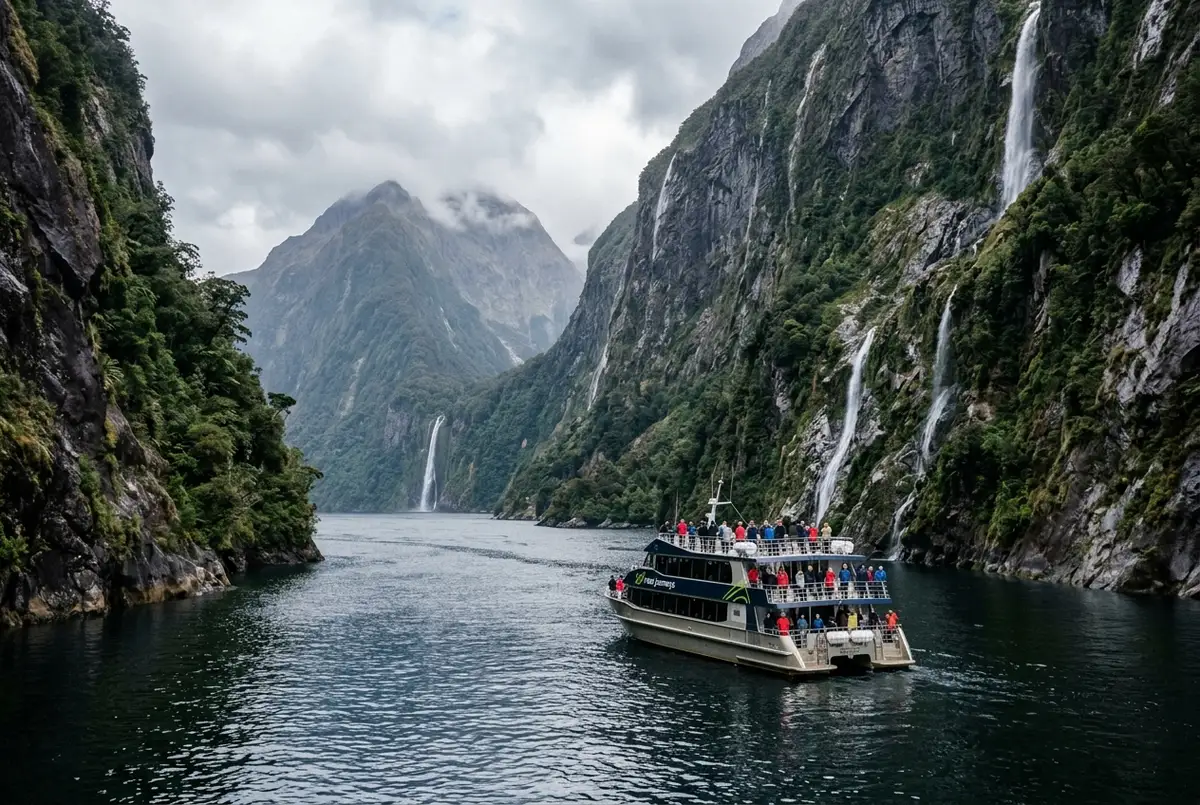
Yes. Rain is the normal state here, not the exception, and it is what keeps the waterfalls running along the cliffs you came to see.
What should I pack for Milford Sound’s weather?
A waterproof outer layer and a warm mid-layer, even in summer, since the fiord’s open water has a real cooling effect. Closed-toe shoes you don’t mind getting wet round out the basics.
Is it cold on a Milford Sound cruise?
Not usually in summer, when highs run 18 to 20 degrees C, but the breeze off the water still makes a mid-layer worth keeping on. Winter is colder and calls for a thermal layer underneath.
What is the most accurate weather site to use?
No single weather site has been verified as most accurate for Milford Sound specifically, since aggregator sites disagree with each other by two to three times on monthly rainfall. The seasonal patterns from DOC and Destination Fiordland above are the most reliably sourced guide.